

Karta Pobytu Waiting Times in Poland by Region
Compare temporary residence permit decision times across all 16 Polish regions, see when the wait starts, and learn what the EU student permit ruling means.
You filed your temporary residence application. You’ve booked your fingerprint appointment, or you’re still waiting for one. Then you see that another office issued decisions months sooner than yours. How much can that comparison actually tell you?
For temporary residence decisions issued between 1 January and 28 September 2026, the average ranged from 8.2 months (249 days) in Małopolskie, whose office is in Kraków, to 22.3 months (680 days) in Śląskie, whose office is in Katowice. The figures come from the Office for Foreigners, as published by the Krakspire Permit Barometer. They describe cases the offices had already decided. Your own wait may be shorter or longer.

How long did temporary residence decisions take in each region?
Find your voivodeship, which is the region responsible for your case. The city in parentheses identifies the main regional office. The figures below are sorted by average time to a decision. Months are rounded and the day counts come from the source.
- Małopolskie (Kraków) · 8.2 months (249 days)
- Warmińsko-Mazurskie (Olsztyn) · 9.1 months (278 days)
- Podkarpackie (Rzeszów) · 10.3 months (313 days)
- Świętokrzyskie (Kielce) · 10.8 months (328 days)
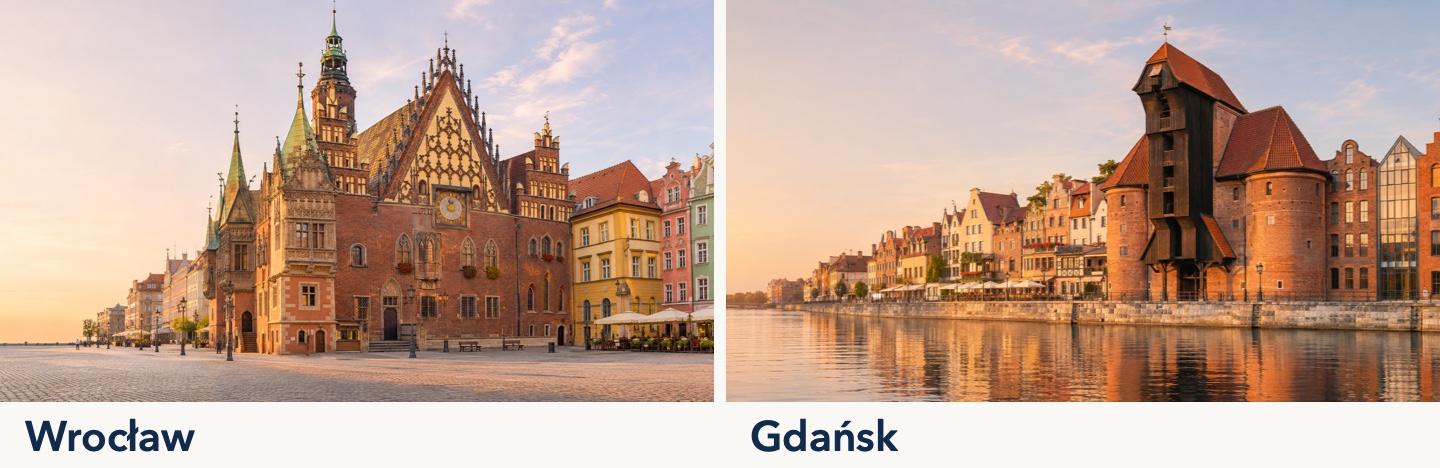
- Dolnośląskie (Wrocław) · 10.8 months (329 days)
- Wielkopolskie (Poznań) · 11.3 months (343 days)
- Łódzkie (Łódź) · 12.6 months (383 days)
- Lubelskie (Lublin) · 12.8 months (389 days)
- Mazowieckie (Warsaw) · 14.0 months (425 days)
- Zachodniopomorskie (Szczecin) · 15.1 months (461 days)
- Podlaskie (Białystok) · 15.4 months (470 days)
- Opolskie (Opole) · 16.4 months (498 days)
- Lubuskie (Gorzów Wielkopolski) · 17.1 months (519 days)
- Kujawsko-Pomorskie (Bydgoszcz) · 18.0 months (547 days)
- Pomorskie (Gdańsk) · 20.4 months (622 days)
- Śląskie (Katowice) · 22.3 months (680 days)
The average of those 16 regional figures was 14.0 months (427 days). Each region counts equally in that calculation. To calculate an average across all individual decisions in Poland, we would also need to know how many cases each region decided. Regional data and reporting period
Does the wait start when you apply or when you give fingerprints?

For the statistics, the Office for Foreigners defines the elapsed time as the period from submitting your application to the office issuing its first decision. So if your fingerprint appointment comes after filing, the time spent waiting for that appointment falls within the elapsed time. Cases still waiting for a decision fall outside this snapshot. If you’re approved, producing and collecting the physical karta pobytu is a later step. Office for Foreigners’ reporting method, table 1 on page 3 · Office for Foreigners’ application guidance
For example, the 313 days for Podkarpackie describe the average time to a decision in that group of cases. The number gives you a way to compare offices. It cannot tell you how much time is left on your application.
What happened to the 60-day deadline?
Poland’s Act on Foreigners normally gives the office 60 days to decide a temporary residence permit case once the applicable procedural conditions are met. The clock starts after the last required step. Depending on your procedure, that can include appearing in person when required, filing a formally complete application or fixing any gaps, and providing supporting documents or reaching the deadline the office set for them. A fingerprint appointment can coincide with your required appearance. Other conditions still matter. Podkarpackie Voivodeship Office’s explanation of the deadline
Article 100d of the special law linked to the war in Ukraine provides for a pause or delayed start to deadlines in covered cases handled by regional offices until 4 March 2027. That is the scheduled end of the pause under the law, so you should check current guidance before relying on it. The date gives no timetable for an individual decision. The ministry’s correspondence with the Polish Ombudsman also describes cases where courts declined to apply the pause. Special Act, Article 100d · Polish Ombudsman’s summary
What did the EU court say about student permits?
If you applied for a residence permit for studies, a 12 November 2026 judgment is especially relevant. The Court of Justice of the EU examined the case of a student applicant in Poland. Under the EU directive that governed the case, the authorities generally have up to 90 days from submission of a complete application. The directive also provides for a pause if the authority asks for missing information or documents. Directive (EU) 2016/801, Article 34
The court held that EU law prevents a national rule from pausing or delaying that deadline in a way that also blocks an applicant from challenging the office’s inaction or delay in court, unless force majeure applies. In this context, that means exceptional circumstances outside the authority’s control that it could not reasonably have avoided. The Polish court handling the case must assess whether those circumstances existed. If you applied on a different basis, such as work or family, check the rules for that permit category before relying on this judgment. Court of Justice of the EU, C-254/25
What can you do while you’re waiting?

- Check the channel your office uses to contact you. Read any message about missing documents or an appointment, including what you need to bring and when you need to reply.
- Add fingerprint appointments and document deadlines to your calendar. Keep the notice handy so you can check the date, location and instructions.
- Keep proof of what you submit. Save your filing confirmation, any delivery receipts and copies of the documents or replies you send. Keeping them together makes it easier to see what the office already has.
Check your office’s own instructions if you’re unsure where to look for a notice. The Office for Foreigners explains how appointments and requests for documents work in its MOS questions and answers.
Still unsure what an office request means or what to check next? You can bring that question to Ask EIP, the AI assistant for life in Poland. For example, try “I sent my documents and haven’t had a reply. What should I check first?” Keep case numbers and other personal details out of the question.